ShogunomicS

Eight books. One thread.

PlayStation, Nintendo, anime, SI. Japan didn't copy Silicon Valley. Silicon Valley is copying Japan.

Book 1 coming soon Coming soon

You won't fully understand SI without the Japan lens.

SI is Super Intelligence, formerly known as AI, the official US term since September 2026 (EO 14434, 29 September 2026).

Every SI headline, every crypto story. Japan embraces the machine (Shinto). The West fears it. Mt. Gox, Bitcoin, robots. It all connects. Web3 is Japan coming home.

The manual you're missing.

Coming soon

The Thesis

"Silicon Valley isn't inventing the future. It is digitizing Japan's past."

Japan is not just a country. The Nihon Shoki placed the accession of Emperor Jimmu in a year the modern calendar reads as 660 BCE. That chronicle is the start of a long protocol story, not a warrant for "oldest on earth." Japan has survived earthquakes, tsunamis, nuclear fire, and asset bubbles not by brute force, but through decentralized consensus, social slashing, and long-term endurance (gaman).

As the Western operating system of infinite growth, hyper-individualism, and centralized fiat fractures, the world is desperately trying to code a replacement using Web3, SI, and decentralized networks. They don't realize they are just rebuilding Edo Japan in cyberspace.

The future runs on ancient Japanese software.

  • SI & Robotics: The West fears SI (monotheism = man playing God). Japan embraces SI (Shinto animism = everything has a spirit). Japan has a distinct advantage in the robotics race because they welcome the machine.
  • Crypto: Dōjima is often described as the world's first officially organized futures exchange, sanctioned in 1730. Domain paper notes (hansatsu) circulated widely. The earliest surviving note is Fukui's silver note of 1661. A government survey at the 1871 abolition counted 244 domains that had issued paper notes. Japan didn't copy blockchain. Blockchain mathematically enforces what Japan has done culturally for centuries.
  • Network States: Tokugawa Ieyasu founded the Tokugawa shogunate in 1603. It ruled until the Meiji Restoration (1867-68). On 14 July 1871 the domains were abolished. 261 domains became 3 fu and 302 prefectures at first.

Japan didn't copy blockchain. Blockchain copied Japan.
Coming soon

The Series

ShogunomicS is eight books, one continuous narrative from 660 BCE to Web3. Each book stands alone. But the full picture emerges when you read the series.

Patterns from Book 1 reappear in Book 6. The Dōjima exchange in Book 2 echoes in Mt. Gox in Book 8. The imperial consensus that built Japan mirrors the trust mechanisms that built Bitcoin. One thread, from the Nihon Shoki's 660 BCE accession year to Web3.

If you read one, you'll understand that book. If you read all eight, you'll see how they connect. The books are designed to reward that discovery.

What Japan Built Before Modern Exchanges Copied the Shape

Futures contracts

In 1730 the Tokugawa shogunate officially authorized the Dōjima rice market, including book-based futures. It is often described as the world's first officially organized futures exchange.

Candlestick charts

Credited to 18th-century Sakata rice merchant Munehisa Homma (traditional attribution). Do not read that as Homma inventing modern OHLC candles.

Short selling & margin

Osaka merchants traded rice they didn't own, posted deposits, and built derivatives. Paper rice tickets exceeded physical supply.

Market psychology

Homma's name is later associated with Sakata market methods in Japanese trading tradition.

When Mt. Gox collapsed in 2014, with 850,000 bitcoins reported missing, it happened in Japan. The echoes of Dōjima rang through the centuries.

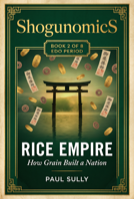
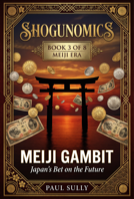
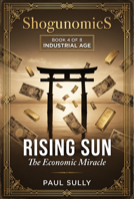
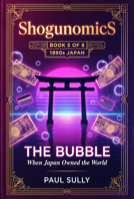
The Eight Books

One thread from the chrysanthemum throne to Web3. Each book connects Japan's history to Bitcoin, crypto, and the future of money.

The Weekly Shogun

About the Author

Paul Sully

Cultural Crypto Alchemist

Paul Sully arrived in Japan in June 1989, months before the bubble burst. He never left. Solopreneur, educator, bar owner in Osaka. 37 years watching a country that built the future before anyone noticed.

Dōjima had authorized futures trading in 1730. Homma is credited with developing candlestick charting (traditional attribution). Mt. Gox collapsed in Tokyo. The same patterns kept appearing: Japanese market systems that looked like crypto, DeFi, and Web3. So he connected the dots.

ShogunomicS is eight books. One thread, from the Nihon Shoki's 660 BCE accession year to Bitcoin. Around 1697 the Yodoya rice market transferred to Dōjima. Those merchants were not primitive versions of modern traders.